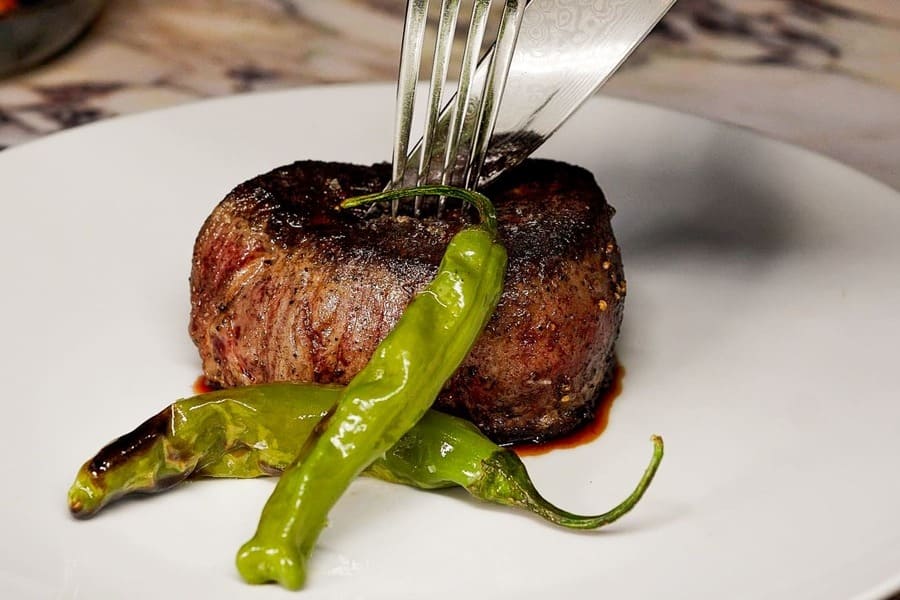
Wagyu is one of the most talked-about cuts of beef you will find on a steakhouse menu. Your initial reaction might be the highly coveted cut of beef that is marbled with fat to create the perfect melt-in-your-mouth steak experience.
However, at Carversteak NYC, our signature steak selections range from prime cuts to different types of Wagyu, including true Japanese A5.
Understanding the differences in Wagyu beef will make your dining experience that much more enjoyable.
What Is Wagyu Beef?
Wagyu is what we call a Japanese cow, a specific breed of cattle raised in Japan. It is prized for the unique intramuscular fat, which we call marbling, that makes it unique from other cattle breeds.
What Makes Wagyu Beef Different From Other Types of Steak?
The key difference between Wagyu beef and other types of steak is how the marbling is distributed throughout the cut. The marbling runs through the beef itself, creating the signature web of white in between the actual meat.
Other key features that make Wagyu different include the following:
- The texture of the steak is very tender and doesn’t need a knife to cut through.
- The flavor is more concentrated because the fat renders slower and at a lower grilling temperature, resulting in a richness unlike other steaks.
- The portion size is usually smaller because Wagyu steaks are considered very rich and filling.
What Are the Different Types of Wagyu Beef?
Wagyu beef doesn’t refer to just one type of steak. There are different types, depending on where the cattle were raised, and include:
- Japanese Wagyu: This is the OG of Wagyu, raised strictly in Japan and following specific breeding and feeding guidelines. Some of the most recognized brands are Kobe and Miyazaki.
- American Wagyu: This is a different type of cow that is a cross between American cattle breeds and Japanese Wagyu cows to create a milder marbling profile for those who prefer less fat in their steaks.
- Australian Wagyu: Japanese Wagyu cattle were imported to Australia in the 1990s. There are ranches where they maintain the full bloodlines of the original cattle and others that have crossbred with other breeds, like Angus cows. The key difference is that since the Wagyu cows are raised in different locations, Australian Wagyu tends to be slightly meatier and a bit leaner.
What Is the Difference Between Japanese Wagyu and American Wagyu?
The difference between Japanese Wagyu and American Wagyu comes down to bloodlines and genetics. In Japan, the cattle are never crossbred, and there are strict guidelines for raising cows. Ranchers carefully track every bloodline, cow born, feeding schedule, and diet to ensure marbling remains consistent.
American Wagyu takes an entirely different path. Ranchers here imported Japanese Wagyu cattle so they could crossbreed with American cattle. The result is steaks that have more marbling than traditional American beef cuts and a firmer texture.
The flavor also tends to be closer to traditional steaks. American Wagyu is a good introduction for those who want to try it but don’t want the intensity of a true Japanese A5 cut initially.
What Does a Wagyu Grade Mean?
Wagyu beef is graded differently in Japan than in Australia and the United States. Since Japan has much stricter standards, its scoring system is more detailed and in-depth than the grading system used in the other countries.
Japanese grading includes a letter-and-number scoring that offers a wealth of information once you understand it.
- The letter: The first part of the grade is the letter A, B, or C. It is the yield grade and is a measure of how much usable meat comes from the cow, not the quality. A is the best grade. The yield is more important for butchers because they want cows with a higher usable meat rating.
- The number: Japanese Wagyu is given a quality grade ranging from 1 to 5. The quality grade refers to the color, fat quality, marbling, and texture. A score of 5 is the highest quality grade a cut can receive.
For Australian Wagyu grading, a single number is assigned to the beef using the AUS-MEAT System, which takes into account the color, fat, weight, and maturity. For Wagyu cuts, you want a score in the range of 7 to 9, which is considered high marbling.
In the United States, grading follows USDA guidelines where a cut is assigned Select, Choice, or Prime. American Wagyu should always fall in the Prime grading and is about the equivalent of 5 to 7 on the AUS-MEAT System.
How Should Wagyu Beef Be Enjoyed?
Wagyu beef is enjoyed differently from standard cuts of steak. You usually want a smaller portion because it is richer in flavor and just as filling as a regular steak. Wagyu also uses a simple preparation — it is grilled over low heat and minimally seasoned, letting texture and flavor be the highlight of the meal.
Wagyu doesn’t need a sauce or other finishing touches. However, some people do enjoy a sauce on the side. When eating a Wagyu steak, it should be eaten more slowly to savor the butter-like texture.
Why Is Wagyu a Signature Choice at Carversteak NYC?
Carversteak NYC is considered one of the top steakhouses in Manhattan. We offer a range of Wagyu selections, giving our guests the option to start with our Austrian cut or choose the traditional Japanese A5 Wagyu.
We also feature a 3 oz Miyazaki Wagyu Striplion, and guests can ask for a larger cut. We even offer an American Wagyu Rib Cap from Snake River Farms, which has less marbling.
Our steakhouse menu also features traditional steaks to choose from, even a 40 oz dry-aged CS Branded Tomahawk, perfect for sharing.
Enjoy Wagyu beef in NYC at Carversteak tonight by making a reservation now. Our luxury steakhouse near Times Square is located on the corner of 8th and 48th inside the Civilian Hotel.
Book your reservation today.
Sources:
A5 Japanese Wagyu Beef Grading.
Alsup, S. (2024). Australian Wagyu: The Ultimate Guide to Premium Beef Luxury.
What Is Wagyu Beef?